Study Guide
November 21, 2026
3 Minutes Read
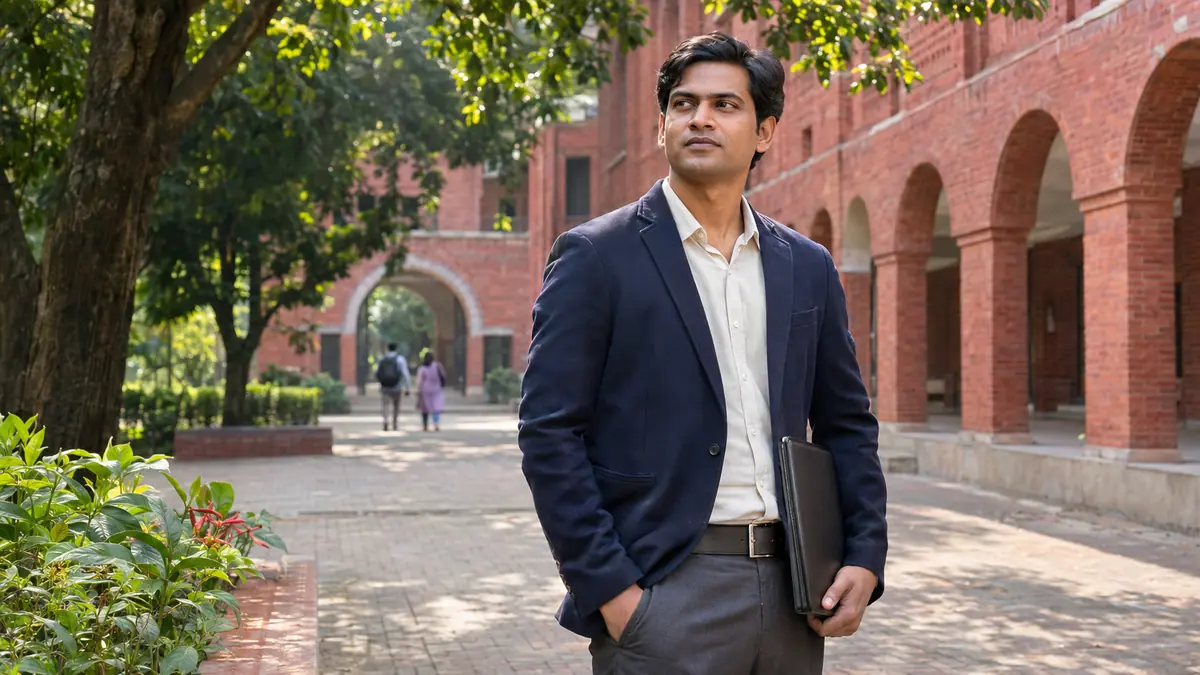
A PhD (Doctor of Philosophy) in Bangladesh is a research doctorate, usually offered by public universities such as the University of Dhaka, the National University and the Bangladesh University of Professionals. Most universities ask for an MPhil degree or a four-year Honours plus one-year Master’s degree, a research proposal (synopsis) and a supervisor, and the standard programme runs for about three to five years depending on the university and whether you study full-time or part-time. Graduates of private universities are often asked to complete an MPhil first, and degrees from abroad usually need an equivalence certificate. If you want guidance on the best route for your profile, contact BRIT Academy admissions.
A PhD is the highest research degree. You spend most of your time on an original research project, usually supervised by a senior academic, and you finish by writing and defending a thesis that adds new knowledge to your field.
A PhD suits you if you want to:
If your goal is a leadership role in business rather than pure research, ask about a Doctor of Business Administration (DBA) as well, which is more applied. You can read about one option in our guide to the online DBA at GlobalNxt University for Bangladeshi students.
In Bangladesh, PhD admission is mainly research-driven rather than exam-driven. A typical path looks like this:
Universities usually publish PhD circulars for particular academic sessions, with deadlines, so keep an eye on each university’s website.
Requirements differ by university and by subject, but these patterns appear in published circulars:
Always read the latest admission notice of your target department, because rules, dates and quotas change by session.
This rule matters to many applicants. Dhaka University’s published notices state that graduates of private universities cannot be admitted directly to its PhD programme and must first take admission in the MPhil programme. Other universities have their own rules, and some accept an MPhil from a recognised university.
If your Honours and Master’s degrees are from a private university, plan for an MPhil to PhD route, or look for a university whose notice accepts your degree.
Published timelines vary:
A practical way to plan: assume at least three years of focused work, and allow extra time for data collection, publications and revisions.
Document lists differ, but you should prepare:
Apply within the circular window. Many universities run more than one intake each year, so check whether the January–June or July–December session is open.
Your proposal is your main selling point. A good one is specific, feasible and original.
BUP’s notice advises candidates to prepare the proposal in consultation with an academic holding a PhD from a reputed university or research organisation. Discuss your idea with a potential supervisor before applying.
Many Bangladeshi professionals also consider a PhD or professional doctorate from a university outside Bangladesh. If you plan to use the degree for a job, promotion or teaching post in Bangladesh, check recognition early:
Before you enrol anywhere, confirm that the university is properly recognised in its own country, check its research-degree regulations, and ask how the degree will be treated by your employer or the UGC. For a UK perspective, see our guide to PhD study in the UK.
Historically, PhD degrees in Bangladesh have been awarded mainly by public universities. Reports in 2024 said the UGC was working on rules to let eligible private universities offer PhD programmes, with attention to research strength and quality oversight. Because this policy may change, check the UGC’s current position and each university’s approval status before applying.
PhD costs depend on the university, the subject and your study mode. Typical cost items include the application fee, registration or tuition fees, research expenses, thesis submission and publication costs. Some universities offer scholarships or fellowships, so ask each department what is available and who is eligible.
No figure is given here because published fees differ widely and change by session. Request a written fee breakdown from the university before you apply.
A PhD gives you credibility and research skills, but outcomes depend on your field, publications and experience.
Choosing the right PhD route is easier with a real conversation. Contact BRIT Academy admissions to talk through your background, your subject and your goals. The admissions team can:
Use the BRIT Academy contact page to send your enquiry, or reach a centre directly:
Ready to begin? Contact BRIT Academy admissions and tell us your subject, your highest degree and your target start date.
Most public universities ask for an MPhil degree, or a four-year Honours plus a one-year Master’s degree, with a research proposal and supervisor. Some allow a three-year Honours plus Master’s with two years of relevant experience. Check each university’s notice.
Typically around three to five years. Dhaka University describes the regular PhD as four years (thesis submittable after two), and part-time registration as five years. Engineering programmes may list three to six years.
At Dhaka University, graduates of private universities cannot enrol directly and must take the MPhil first. Other universities set their own rules, so read the specific notice.
Not always. An MPhil is one route, and a four-year Honours plus one-year Master’s from a public university is another, depending on the university.
Some universities offer part-time registration, usually with a longer duration. Dhaka University, for example, lists a five-year part-time registration.
Completed application form, attested certificates and transcripts, photographs, a research proposal, the fee receipt and any experience proof or supervisor consent required by the university.
Yes, in most cases. A synopsis or proposal is part of the application, and BUP advises preparing it with the help of an experienced academic.
Often, yes, if you are applying to a Bangladeshi university or using the degree locally. Dhaka University requires an equivalence procedure for international degrees, and Comilla University assesses foreign grades using UGC guidelines.
The UGC was reported in 2024 to be developing rules to allow eligible private universities to offer PhDs. Confirm the current status and approval before you apply.
Visit the BRIT Academy contact page, fill in the enquiry form or call a centre, and share your subject, highest degree and preferred start date.
A PhD takes planning, a clear research idea and the right admission route. Talk to the BRIT Academy admissions team about your options. Contact us today. You can also explore more guides on the NWC Education blog or learn about us.
*Admission rules, dates and fees change by session. Always confirm current details with the university and check the latest circular before applying.*

Study Guide
Study Guide

NWC Dhaka Office
AR Tower (Lift 14), 24 Kemal Ataturk Avenue, Banani, Dhaka
01703-304632, 01644474563, 01848452415
dhaka@nwc.com.bd
NWC Sylhet Office
Al-Hamra Shopping Center, House No – 915, 9th Floor (Lift – 8), Hazrat Shahjalal Road, Zindabazar, Sylhet
01304022511, 01842224482
NWC Moulvibazar
2nd Floor, Modhuban Building, 15/1 Dhaka Sylhet Road, Kusumbag C/A, Maulvi Bazar 3200
01709332743,
01894962948
moulvibazar@nwc.com.bd
NWC Chittagong
Aerial Legend (10th floor) CDA Avenue,
beside O R Nizam Rd 7, East Nasirabad, GEC Circle, Chattogram.
+8801332842105, +8801894962932
contact@nwc.com.bd
Copyright © 20225 NWC Education